The Fed's worst nightmare - $1,000.00 Ounce Gold! By Paul R. La Monica,
CNNMoney.com editor at large
Last Updated: March 13, 2008: 10:53 AM EDT
Ugly retail sales and a somber
forecast from CFOs point to recession, but rising oil and
gold prices and a weak dollar show inflation. What's Ben Bernanke
to do?
NEW YORK (CNNMoney.com) -- It's days like
today that will make many investors wish they stayed in bed.
And they're not the only ones. Something tells
me that Ben Bernanke and the rest of the Federal Reserve's
policy-making committee would like to run and hide as well.
Where to begin? Retail sales for February
were shockingly weak, with sales falling during 0.6% during
the month compared to economists' forecasts of a 0.2% gain.
Those numbers put dents in the argument that consumers would
keep spending in the face of the housing downturn.
Slippery Dollar
Wall Street is also digesting some sobering
results from a survey of chief financial officers released
by Duke University and CFO magazine late Wednesday.
TalkBack: Should the Fed keep cutting rates?
According to the survey of more than 1,000
CFOs, conducted last week, three-quarters of the respondents
said the economy is either in a recession already or will
hit one this year, and nearly 90% of CFOs surveyed said they
didn't think the economy would rebound until late 2009.
So this means the Fed should slash interest
rates at its next meeting on March 18, right? After all, according
to federal funds futures, investors are pricing in a 72% chance
of a three-quarters of a percentage point cut.
But not so fast.
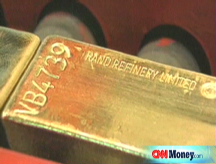
Gold hit $1,000 an ounce for the first time
ever Thursday morning. Oil is slouching towards $111 a barrel.
And the dollar hit a 12-year low against the yen and a new
record low against the euro. Can you say inflation?
Actually, it's worse than mere inflation.
The combination of rising commodity prices and the weakening
growth forecast for the economy has people worried about 1970s
style stagflation. I hope Bernanke can dig up a pair of old
bell bottom pants. Do the hustle!
"Clearly, the Fed needs to switch to
Plan B," noted Duke professor Campbell R. Harvey in a
release about the CFO survey.
But what is Plan B exactly? It's difficult
to figure out just what the Fed can do other than let the
credit markets and housing markets work themselves out, and
hope the actions the central bank has already taken stimulate
the economy at some point.
Time may be the Fed's only ally
Even though the Fed's series of rate cuts
since last September - as well as the hundreds of billions
in cash and Treasurys that the central bank has pledged to
loan capital-constrained financial institutions - have failed
to encourage more lending just yet, investors and consumers
need to realize there is a lag effect of several months before
Fed policy moves have an impact. History shows that Fed easing
will eventually work their magic.
Hopefully, the rate cuts will encourage more
banks to loosen their lending standards again, and will spur
consumers and corporations to start spending more by the end
of 2008 or early 2009.
Plus, even though there is a debate about
whether the tax rebate checks that consumers will receive
in the next few months will really help the economy that much,
it's hard to see how the rebates can hurt.
But as I've said earlier this week in this
column and numerous times before that, the Fed cannot drop
the ball on inflation even if there are more signs of severe
economic weakness. On Friday morning, we'll find out how much
consumer prices rose in February.
Economists are predicting a 0.3% rise in the
headline Consumer Price Index (CPI) number and a 0.2% increase
in the so-called core number, which excludes volatile food
and energy costs.
If the CPI figures are higher than expected,
the Fed may have no choice but to disappoint Wall Street next
week and only cut interest rates by a half-point, or perhaps
even only by a quarter-point.
A quick fix for the economy is not what's
needed. The Fed has to ensure that its actions don't lead
to the type of double-dip, or W-shaped recession, that some
economists and market strategists are now talking about.
Harvey indicated this could be the longest
slowdown since the double-dip of 1979 to 1981. But if the
Fed holds firm and doesn't stoke even greater inflation by
lowering its key federal funds rate that much further, perhaps
there's a chance this slowdown will turn into, at worst, just
your garden-variety recession - and not an unwelcome rerun
of what happened in the 1970s.
What do you think? Will more rate cuts help
get the economy back on track or should the Fed focus more
on inflation?