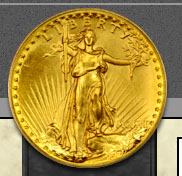
Pattern Coins: Pattern coins consist of a huge number of new design concepts and motifs. For the most part, pattern coins are experimental, trial pieces. They have been illustrated extensively in the book United States Pattern Coins by Hewitt Judd. Some pattern coins were created for sale to collectors and dealers as special pieces for numismatists. Many pattern coins are familiar because they began as proposed designs that became accepted and put into use. Some pattern coins are completely unfamiliar because they are designs that were rejected but are now part of history. Unlike regular issue coins or proof coins, pattern coins were not made for sale to the general public. Yet many were secretly and unofficially sold and traded. Beginning in 1887, the Mint prohibited the sale and distribution of pattern coins. As a result, most pattern coins dated after 1885 are extremely rare.
U.S. Rare Coin Investments is buying, selling, trading Patterns and all types of Rare Coins & Rare Gold Coins! Please call: 1-800-624-1870
J-67 1836 G$1 Pattern (J67 1836 Gold Dollar Pattern) NGC PF67. R-5. Gold Gobrecht $1! This exceptional proof 1836 Gold Dollar Pattern is tied for the finest known at...More >>>
J-72 50c J72 1838 Half Dollar, PCGS PF63 CAC. R-5. This eye-appealing crisp proof 1838 Pattern Half Dollar has exceptional peripheral toning on both sides. It is tied for...More >>>
J-104 (J104) 1839 S$1 (1839 Silver Dollar) PCGS PF50 CAC. This rare Proof 1839 Pattern Dollar coin has mint luster glowing within its devices. Shades of tan, rose, steel-grey...More >>>
J-177 (J177) 1856 1/2c PCGS PF63. R-5. Copper-Nickel Half Cent. This rare, proof, pattern half-cent shows not a trace of wear in keeping with the grade. The surfaces are clean...More >>>
J-270 1857/1860 $2.50 NGC PF62 RB CAC. R-7-. Fantasy mule: 1857 Liberty Head obverse over wreathed Quarter Eagle reverse. This double dated, unusual, proof pattern...More >>>
J-272 (J272) 1860 $5 PCGS PF64 BN CAC. R-6- Copper $5 Lib featuring Longacre's Liberty head with Phrygian cap. Reverse "V" is an inverted "A". Comes with original lot tag 6/83 Stack's lot 842. CAC pop 1/2 (3 total).More >>>
J-341 1863 50C (J341 1863 Half Dollar) NGC PF66 BN. This rare, copper, proof 1863 Half Dollar Pattern coin is tied for the finest at both grading services with one other piece...More >>>
J-386 (J386) 1864 25C (1864 Quarter Pattern) PCGS PF65 CAC. R-7-. This rare, gem, proof 1864 Pattern Quarter has highlights of lovely cobalt and lavender toning on both sides...More >>>
J-434 S$1 (J434 S$1) 1865 Silver Dollar PCGS PF64 CAC. This proof, pattern 1865 Silver Dollar is a transitional With Motto piece. The coin has an almost cameo contrast...More >>>
J-1691 (J1691 5c) 1882 5c, PCGS PF64 BN. R-6. Shades of brown mixed with touches of green, yellow, and red adorn the obverse of this proof 1882 nickel pattern...More >>>
Patterns provide students and collectors a chronology of the continuing efforts of engravers and artists to present their work for approval. Throughout the 200+ years of federal coinage production, concepts meant to improve various aspects of circulating coins have been proposed and incorporated into representative patterns. In some instances, changes have been prompted by an outcry for higher aesthetics, a call for a more convenient denomination, or a need to overcome striking deficiencies. In many other instances, the Mint simply created special coins for the numismatic trade-often controversial in their time, but enthusiastically collected today. Certain patterns, bearing particular proposed designs or innovations, provided tangible examples for Mint and Treasury Department officials or members of Congress to evaluate. If adopted, the pattern design became a familiar regular-issue motif; those that were rejected have become part of American numismatic history.
The patterns listed and illustrated in this section are representative of a much larger group. Such pieces generally include die and hub trials, off-metal Proof strikings of regular issues, and various combinations of dies that were sometimes struck at a later date. Certain well-known members of this extended pattern family historically have been included with regular issues in many popular, general-circulation numismatic reference books. The four-dollar gold Stellas of 1879 and 1880; certain Gobrecht dollars of 1836, 1838, and 1839; and the Flying Eagle cents of 1856 are such examples. No official mintage figures of patterns and related pieces were recorded in most instances, and the number extant of each can usually only be estimated from auction appearances and from those found in museum holdings and important private collections. Although most patterns are very rare, the 2,000+ distinct varieties make them unexpectedly collectible-not by one of each, but by selected available examples from favorite types or categories.
Unlike regular coin issues that were emitted through the usual channels of commerce, and Proofs of regular issues that were struck expressly for sale to collectors, patterns were not intended to be officially sold. Yet as a matter of Mint policy in accordance with certain previously established restrictions, countless patterns were secretly and unofficially sold and traded to favorite dealers and collectors, disseminated to government officials, and occasionally made available to numismatic societies. Not until mid-1887 did the Mint enforce stringent regulations prohibiting their sale and distribution, although there had been several misleading statements to this effect earlier. In succeeding decades the Mint, while not making patterns available to numismatists, did place certain examples in the Mint Collection, now called the National Numismatic Collection, in the Smithsonian Institution. On other occasions, selected patterns were obtained by Mint and Treasury officials, or otherwise spared from destruction. Today, with the exception of certain cents and five-cent pieces of 1896, all pattern coins dated after 1885 are extremely rare.
The private possession of patterns has not been without its controversy. Most significant was the 1910 seizure by government agents of a parcel containing some 23 "pattern pieces" belonging to John W. Haseltine, a leading Philadelphia coin dealer with undisclosed private ties to Mint officials. The government asserted that the patterns had been removed from the Mint without authority, and that they remained the property of the United States. Haseltine's attorney successfully used the Mint's pre-1887 policies in his defense, and recovered the patterns a year after their confiscation. This set precedent for ownership, at least for the patterns minted prior to 1887, as all of the pieces in question predated that year. Today, pattern coins can be legally held.
Among the grandest impressions ever produced at the U.S. Mint are the two varieties of pattern fifty-dollar gold pieces of 1877. Officially titled half unions, these large patterns were created at the request of certain politicians with interests tied to the gold-producing state of California. Specimens were struck in copper, and one of each variety was struck in gold. Both of the gold pieces were purchased around 1908 by numismatist William H. Woodin (who, years later, in 1933, served as President Franklin D. Roosevelt's first secretary of the Treasury). The Mint desired to re-obtain the pieces for its own collection, and through a complex trade deal for quantities of other patterns, did so, adding them to the Mint Collection. Now preserved in the Smithsonian Institution, these half unions are regarded as national treasures.