Feds seek $7M in privately made Liberty Dollars
Feds seek $7M in 'Liberty Dollars' that were
invented by man to compete with US dollar by Tom Breen, Associated
Press | April 04, 2011
RALEIGH, N.C. (AP) -- Federal prosecutors
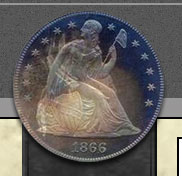
on Monday tried to take a hoard of silver "Liberty
Dollars" worth about $7 million that authorities say
was invented by an Indiana man to compete with U.S. currency.
Bernard von NotHaus, 67, was convicted last
month in federal court in Statesville on conspiracy and
counterfeiting charges for making and selling the currency,
which he promoted as inflation-proof competition for the
U.S. dollar.
His Charlotte-based lawyer, Aaron Michel,
is appealing that verdict. He wrote in a motion filed Thursday
that von NotHaus did nothing wrong because he didn't try
to pass the Liberty Dollars off as U.S. dollars.
"The prosecutors successfully painted
Mr. von NotHaus in a false light and now the U.S. Attorney
responsible for the prosecution is painting the case in
a false light, saying that it establishes that private voluntary
barter currency is illegal," Michel wrote.
The trial was scheduled to resume Monday
in Statesville. The case involves more than five tons of
Liberty Dollars and precious metals seized from a warehouse,
which the government wants to take by forfeiture, according
to federal prosecutors and Michel.
Von NotHaus began issuing Liberty Dollars
in 1998, as head of the Evansville, Ind.-based National
Organization for the Repeal of the Federal Reserve and Internal
Revenue Code. In 2007, the group's headquarters were raided
along with the Sunshine Mint in Coeur D'Alene, Idaho, where
the coins were made. The case is being tried in Statesville
because one of the organization's top officers is based
in Asheville, and because an undercover investigator made
contact with the group in North Carolina.
Federal prosecutors successfully argued
that von NotHaus was, in fact, trying to pass off the silver
coins as U.S. currency. Coming in denominations of 5, 10,
20, and 50, the Liberty Dollars also featured a dollar sign,
the word "dollar" and the motto "Trust in
God," similar to the "In God We Trust" that
appears on U.S. coins.
"Attempts to undermine the legitimate
currency of this country are simply a unique form of domestic
terrorism," U.S. Attorney Anne Tompkins said in a statement
after von NotHaus was convicted.
Von NotHaus has argued it's not illegal
to create currency to privately trade goods and services.
He also has said his organization took pains to say the
Liberty Dollars shouldn't be called "coins" and
shouldn't be presented as government-minted cash. Among
other benefits, Michel's motion argues, the Liberty Dollars
were a means to help keep currency in local communities
by creating networks of merchants and consumers who used
the money.
Numerous cities and regions around the country
have experimented with local currency, but laws restrict
them from resembling U.S. bills or from being passed off
as money printed by the federal government.
The concerns raised by von NotHaus and his
group are finding resonance among some state lawmakers,
too. About a dozen states have legislation that would allow
them to produce their own currency backed by gold or silver
in the event of hyperinflation striking the U.S. dollar.
North and South Carolina are among those states.
That's partly why von NotHaus' group has
been followed for years by the Southern Poverty Law Center,
a group that tracks political extremism. Long before the
government began its investigation into von NotHaus, the
group was raising concerns about the popularity of Liberty
Dollars among fringe groups on the far right.
"He's playing on a core idea of the
radical right, that evil bankers in the Federal Reserve
are ripping you off by controlling the money supply,"
said Mark Potok, spokesman for the group. "He very
much exists in the world of the anti-government patriot
movement, whatever he may say. That's who his customers
are."
Von NotHaus is currently free on bond. If
the conviction against him is upheld, he faces up to 25
years in prison and a fine of $750,000. A sentencing date
has not been set yet.