LIBERTY HEAD GOLD
EAGLE - NO MOTTO ON REVERSE - (1838-1866)
Gobrecht’s
Coronet Eagle Liberty Head, No Motto
President Thomas Jefferson ordered mintage
of gold eagles stopped between 1805 and1837 because gold
coins were being melted for bullion. Coinage of this denomination
was resumed with Christian Gobrecht’s Liberty Head,
No Motto eagle. The size, weight, and fineness were reduced
so that the new coins were not intrinsically worth more
than their denominated value.
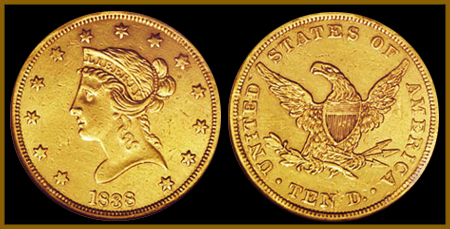
The Liberty Head, No Moto eagle shows Liberty
facing left in profile wearing a LIBERTY inscribed coronet
with her hair tied in the back in beads. Two long curls
hang down her neck, one in the back and the other on the
side. She is surrounded with thirteen six-pointed stars.
The date is below the truncation, which shows no drapery.
The motif is taken from a Benjamin West painting of Venus.
It was also used with modifications for the Large Cents
of 1839. The reverse shows a heraldic eagle with outstretched
wing looking to the left. On its chest is the Union shield.
In its talons it holds the olive branch and arrows. The
error in the previous issue, Scot’s eagle held the
arrows and the olive branches in the wrong talons, is corrected.
Interrupted by the tips of the eagle’s wings, UNITED
STATES OF AMERICA surrounds the reverse, separated from
the denomination TEN D. by dots. Dentils are near the edge
on both sides of the coin, and the edge is reeded.
During the first two years of production, the First Head
had Large Letters with it. It continued in use until June
1839 and is sometimes called the “Head of 1838.”
Later in the year the head was redesigned, made smaller,
and the letters were smaller too. This one is sometimes
called the “New Portrait, Small Letters,” “Second
Head, Small Letters,” or “Head of 1840.”
Generally speaking Liberty Head, No Motto
eagle coins had low mintages. While a few years had large
mintages of more than 200,000, most were significantly less.
Some dates are difficult to obtain because their mintages
were limited or they were not saved. In 1840 and 1841 small
numerals were used. These were the same as for the cents
of that year. In 1842 both large and small numerals were
used. The same is true for the 1850 and 1854-O eagles. In
1844 Gobrecht died and Longacre became the Engraver. His
job consisted mainly of punching the dates and mintmarks
into the working dies. He supposedly made several blunders
including 1846-O, 6 over 5; 1849 over 1848; 1853, 3 over
2; and 1865-S, 865/inverted 186. In this last one, the three
numbers were entered upside down and then corrected. The
Hard Times, which saw high unemployment and starvation,
was one of the reasons for the limited mintages through
the mid 1840’s. Later double eagles, which were first
used in 1850, were preferred over eagles for large commercial
and international transactions.
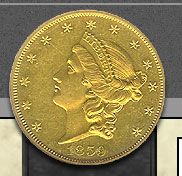
In 1859 Engraver Longacre prepared a new
reverse that was used on Philadelphia coins until 1865.
On them the eagle’s claws are thinner and shorter.
This change is not seen on the branch mint coins because
they were using 1857-1858 dies.
The last date for the Liberty Head, No Motto
eagle was supposed to have been 1865. However in 1866, 8,500
S mint No Motto coins were issued because the new reverse
die had not arrived in San Francisco. Later that year when
more eagles were made, 11,500 With Motto 1866-S coins were
minted.
Low
mintage first year of Liberty Head designed by Christian
Gobrecht; only about 90 are known; 4 came from the Republic;
usually seen heavily circulated. The finest certified
are 3 in MS63. 3 proofs of this date are known.
Found
with Large and Small Letters (Head of 38 or Head of
40). Small Letters variety is rarer with only about
55 known. Only 2 Small Letters and 7 Large Letters came
from the Republic. The finest certified with Large Letters
is a single MS66 example. The finest certified with
Small Letters is a single MS64 example. 3 proofs of
this date are known; they are the Type of 1838.
Usually
found in circulated condition. Most certified examples
are XF40 to AU58. 11 came from the Republic. Only 8
have been certified Mint State. The finest is a single
MS62 example.
Usually
found in circulated condition. Most certified examples
are XF40 to AU58. 20 came from the Republic; 1 came
from the Central America. Only 20 have been certified
Mint State. The finest is a single MS63 example.
First
date of denomination for the New Orleans Mint. Extremely
low mintage. Approximately 65 are known. Only 1 came
from the Republic. They are often seen with heavy bag
marks. None have been certified in Mint State. The finest
certified are 2 in AU58.
Found
with Small and Large Dates. The Small Date is rarer.
Often seen with prooflike surfaces. 4 Small Dates and
11 Large Dates came from the Republic. The finest certified
Small Date is a single MS63 example. The finest certified
Large Date are 2 in MS65.
Often
seen with prooflike surfaces and heavy bag marks. Most
are found in circulated condition. Only 4 have been
certified Mint State. The finest certified are 2 MS61
examples. 2 came from the Central America; 20 from the
Republic have been certified by NGC. 5 proofs of this
date are known.
Often
seen well struck with prooflike surfaces. Usually found
in circulated condition. 35 came from the Republic;
2 came from the Central America. Only 14 have been certified
Mint State, the finest of which is a single MS64 example.
Approximately
65 of this low mintage date are known. None were found
on the Republic. Only 2 have been certified in Mint
State. The highest is a single MS63.
Available
in XF to AU grades. 32 came from the Republic; 2 came
from the Central America. Only 23 have been certified
in Mint State. The highest are 2 in MS63.
Usually
found in XF to AU grades. 2 came from the Republic.
Only 4 have been certified in Mint State. The highest
are 2 in MS62. 4 proofs of this date are known.
Usually
found in XF to AU grades. 19 came from the Republic;
3 came from the Central America. Only 15 have been certified
in Mint State. The highest is a single MS64 example.
Varieties include Repunched 84, repunched 45, and Large
Date over Small Date.
Although
6 were found on the Republic, most are in XF or worse
condition. Only 6 have been certified Mint State, the
finest of which are 3 in MS62. 4 proofs of this date
are known.
Usually
found in low circulated grades. Very rare in AU grades.
Usually with poor strikes and poor quality planchets.
Only 3 have been certified in Mint State, the highest
of which is a single MS64. 13 came from the Republic;
3 came from the Central America. Also found with a 6
over 5 overdate.
Most
common issue of the series. 221 came from the Republic;
7 came from the Central America. Usually bright yellow-gold
with coppery spots. Sometimes with prooflike surfaces.
Rare above MS62. The finest certified is a single MS64
example.
Highest
mintage for any New Orleans gold coin. Usually found
in circulated grades up to AU. 12 came from the Republic;
3 came from the Central America. Rare above MS61. Finest
certified are 3 MS64 examples.
High
mintage, yet only 40 have been certified in Mint State.
Most are seen XF to AU. 39 came from the Republic, 1
came from the Central America, all in circulated condition.
The finest certified is a single MS65 example.
Common
in lower grades, only 15 certified in Mint State. Most
are poorly struck, some have prooflike surfaces. 9 came
from the Republic; 2 came from the Central America.
The finest certified are 2 in MS66.
Available
in circulated grades and lower Mint State as well. 167
came from the Republic; 6 came from the Central America.
The finest certified are 6 in MS64 condition.
Rare
in all grades; exceedingly rare in Mint State with only
3 certified. The finest certified are 2 in MS61. 8 came
from the Republic, all in circulated condition.
Found
with Small and Large dates. The Small Date is rarer.
2 came from the Central America. 72 came from the Republic,
of which 7 were Small Dates. 35 Large dates have been
certified in Mint State. The finest is a single MS64.
11 Small Dates have been certified in Mint State. The
finest is a single MS63.
Usually
found in circulated condition. 16 came from the Republic
and range in XF to AU grades; 2 came from the Central
America. Only 4 have been certified in Mint State, the
finest of which is a single MS65 example.
Available
in circulated condition, rare in Mint State with only
32 certified in all MS grades. 33 circulated pieces
came from the Republic. The finest certified is a single
MS64 example.
Easily
found in grades up to AU. Usually found weakly struck
at the stars, frequently with many bagmarks. 99 came
from the Republic. Only 25 have been certified in Mint
State, the finest are 3 in MS64 condition.
Obtainable
in XF to AU condition. Usually seen lustrous with orange-yellow
gold color. Rare above MS61. The finest certified is
a single MS66 example. 2 came from the Central America.
48 from the Republic have been certified by NGC.
Scarce
in circulated grades. Only 3 certified in Mint State,
the finest of which is a single MS61 example. 3 came
from the Republic. All coins have a tiny hollow ring
in center of the reverse, probably used by the engraver
as a centering device.
Common
in grades up to AU. Rare above MS61. 47 from the Republic
have been certified by NGC; 1 came from the Central
America. The finest certified are 4 in MS64. Look for
the rare 1853/2 overdate, 3 of which have been certified
in Mint State.
Available
in VF to AU grades. Extremely rare in Mint State with
only 7 examples certified in Mint State, all MS61s.
13 came from the Republic, 1 of which was in Mint State;
1 came from the Central America.
Most
found in XF to AU condition. Only 21 certified in Mint
State. 22 came from the Republic; 1 came from the Central
America. Most show weak stars. The finest are 4 in MS64.
Found
with Small or Large dates. 2 came from the Central America;
17 came from the Republic, 12 of them Large Dates. Small
Dates are scarce. Only 2 have been certified in Mint
State, the finest a single MS61. 23 Large Dates have
been certified in Mint State, the finest are 2 in MS63
condition.
First
eagle struck at San Francisco. Usually available in
XF to AU grades. Only 10 have been certified in Mint
State, the finest are 2 in MS62 condition. 39 from the
Republic have been certified by NGC; 13 came from the
Central America.
Available
in XF to AU grades. 44 came from the Republic, including
14 in lower MS grades; 2 came from the Central America.
Rare above MS61. The finest certified is a single MS65
example.
Low
mintage issue with approximately 70 known in all grades.
None were found on the Republic; 6 came from the Central
America. None have been certified in Mint State. The
finest certified are 3 in AU58.
Available in XF to AU grades. Rare above MS61. The finest
certified are 3 in MS64. Usually found lustrous with
a reddish-gold color. 17 from the Republic have been
certified by NGC.
Scarce in circulated grades; rare in Mint State. First
use of upright 5 on eagle. 5 came from the Republic.
Stars and Liberty’s hair often weakly struck.
Often with green-gold color. Only 4 certified in Mint
State all of which are MS60.
Available
in XF to AU grades. Rare in Mint State. Only 9 have
been certified in Mint State. The finest certified is
a single MS63 example. 22 from the Republic have been
certified by NGC; 28 came from the Central America.
Usually
seen in VF to XF. Scarce in AU and rare in Mint State
with only 7 certified in all MS grades. 9 came from
the Republic. The finest certified are 2 in MS62.
Rare
in all grades; only 7 certified in Mint State. The finest
certified are 2 in MS64. 1 from the Republic has been
certified MSPL61; 12 came from the Central America.
Very low mintage; only about 60 are known in all grades;
5 have been certified Mint State, the finest of which
are 2 in MS64. Only 1 came from the Republic. 4 proofs
of this date are known.
Scarce
in all grades; rare in Mint State with only 12 certified
in MS grades. The finest certified is a single MS63.
4 from the Republic have been certified by NGC.
Usually
found in circulated condition below XF. 12 have been
certified Mint State, the finest of which is a single
MS63. 7 from the Republic have been certified by NGC.
8 proofs of this date are known.
Scarce
in all grades; only 18 have been certified in Mint State,
the finest of which are 3 in MS64. 9 came from the Republic.
Approximately 10 proofs are known for this date.
Scarce
in all grades; most often seen in XF to AU grades; only
5 have been certified in Mint State, the finest of which
is a single MS63 example. 2 from the Republic have been
certified by NGC.
Rare
in all grades; approximately 40 known; only 2 have been
certified in Mint State, the finer of which is an MS62
example. 3 from the Republic have been certified by
NGC.
One of the more common dates of the type; rare above
MS62; the finest certified is a single MS66 example;
51 from the Republic have been certified by NGC. Approximately
11 proofs of this date are known.
Scarce
in all grades; rare in Mint State with 12 certified;
the finest certified is a single MS64 example. 9 from
the Republic have been certified by NGC. Approximately
14 proofs of this date are known.
Rare
in all grades; approximately 40 are known; 3 have been
certified Mint State; 1 came from the Republic; the
finest certified are 2 MS63 examples. Approximately
15 proofs of this date are known.
Very
low mintage; rare in all grades; approximately 50 are
known; 2 came from the Republic; 6 have been certified
Mint State, the finest of which is a single MS63 example.
Approximately 18 proofs of this date are known.
Extremely low mintage; approximately 25 are known; none
have been certified in Mint State; none were found on
the Republic; the finest certified is a single AU55
example.
Very
low mintage; approximately 65 are known; 1 came from
the Republic; 2 have been certified Mint State; the
finer is an MS63; Approximately 14 proofs of this date
are known.
Rare
in all grades; found either with normal or inverted
date. Approximately 30 Normal Dates and 50 Inverted
Dates are known. Only 1 Normal Date has been certified
Mint State, an MS60, and 2 Inverted Dates have been
certified Mint State; the finer is an MS64 example.
No Normal Dates were found on the Republic. 1 Inverted
Date, an MS62 was found on the Republic, and the finest
certified MS64 was found on the Brother Jonathan.
Rare
in all grades; approximately 50 are known; only 1 has
been certified Mint State, an MS60; none were found
on the Republic, the Central America, or the Brother
Jonathan because all sank before 1866.