| DATE |
NOTES |
| 1840
Quarter Eagle |
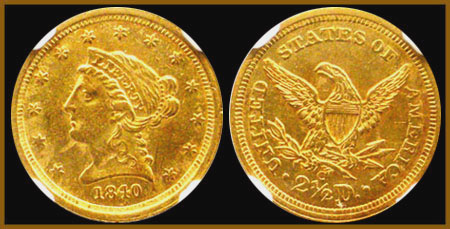
1840
Quarter Eagle - The Philadelphia Mint produced the
first Quarter
Eagles of Christian Gobrecht’s design in 1840.
Only 2 proofs known to exist today....More
>>> |
| 1840-C
Quarter Eagle |
1840-C
Quarter Eagle: The 1840-C
Quarter Eagle has the second lowest mintage of all
four issues of 1840...More
>>> |
| 1840-D
Quarter Eagle |
1840-D
Quarter Eagle - Low mintage date, by far the rarest
of the four quarter eagle issues of 1840 is that of the
Dahlonega Mint. Its mintage...More
>>> |
| 1840-O
Quarter Eagle |
1840-O
Quarter Eagle - Unlike many other issues the highest
quarter eagle mintage in 1840 was archived at the New
Orleans mint...More
>>> |
| 1841
Quarter Eagle |
1841
Quarter Eagle - The first of several Proof-only dates
for the quarter eagle denomination, it is believed that
no business strike. Only 4 proofs known to exist today...More
>>> |
| 1841-C
Quarter Eagle |
Except
for center of obverse, usually well struck; exceedingly
rare in Mint State. |
| 1841-D
Quarter Eagle |
Low
mintage date, usually well struck; rare in all grades,
prohibitively rare in Mint State. |
| 1842
Quarter Eagle |
Low
mintage date, only 50 to 60 known in all grades; only
2 certified in Mint State. |
| 1842-C
Quarter Eagle |
Low
mintage coin, usually poorly struck. Die break on reverse
from tip of left wing to rim; rare in all grades, prohibitively
rare in Mint State. |
| 1842-D
Quarter Eagle |
Low
mintage date, less than 100 known in all grades; rare
in all grades, only 4 certified in Mint State; often found
with roughness on Liberty’s neck. Look for repunching
on date. |
| 1842-O
Quarter Eagle |
Low
mintage for New Orleans; often weakly struck in centers,
exceedingly rare in Mint State. |
| 1843
Quarter Eagle |
Usually
well struck, last two digits larger than others, exceedingly
rare in Mint State. 7 proofs have been certified by both
services. |
| 1843-C
Quarter Eagle |
These
are found with either a Small Date and a Crosslet 4 or
a Large Date and a Plain 4, with the former being very
rare with only 70 to 80 known in all grades, and prohibitively
rare in Mint State, usually well struck with sharp wire
rim on obverse. Large Date only 150 to 200 known, exceedingly
rare above MS61, most are weak on center of obverse. |
| 1843-D
Quarter Eagle |
These
all have a Small Date with a Crosslet 4 and small and
large mintmark, which is rarer; both prohibitively rare
above MS61. |
| 1843-O
Quarter Eagle |
These are found with either a Small Date and a Crosslet
4 or a Large Date and a Plain 4, with the latter being
the rarer of the two varieties. Exceedingly rare above
MS62. |
| 1844
Quarter Eagle |
Low
mintage coin; less than 100 known in all grades. Prohibitively
rare in Mint State, none certified higher than MS62. Only
1 proof has been certified. |
| 1844-C
Quarter Eagle |
Rare
in all grades, exceedingly rare in Mint State; always
poorly struck especially feather details on reverse. |
| 1844-D
Quarter Eagle |
Usually
poorly struck in center of obverse, rare in Mint Sate. |
| 1845
Quarter Eagle |
Most
available Philadelphia quarter eagle issue of the decade;
very rare above MS63. Only 4 or 5 proofs known to exist
today. |
| 1845-D
Quarter Eagle |
Usually
found well struck with clashed dies showing on eagle’s
neck; exceedingly rare in Mint State. |
| 1845-O
Quarter Eagle |
Low
mintage date, 80 to 100 known in all grades, often seen
with die defect to right of Liberty’s neck, major
rarity in Mint State. |
| 1846
Quarter Eagle |
Usually
found well struck, last digit bolder than others, exceedingly
rare above MS61. Only 4 or 5 proofs known to exist. |
| 1846-C
Quarter Eagle |
Low
mintage date, die rust on obverse and clash marks common,
exceedingly rare in Mint State. |
| 1846-D
Quarter Eagle |
Exceedingly
rare in Mint State grades, look for the D/D mintmark variety. |
| 1846-O
Quarter Eagle |
Usually
with weak strike, mintmark is large, last two digits are
tilted and often repunched, exceedingly rare above MS61. |
| 1847
Quarter Eagle |
Exceedingly
rare in Mint State, date too large, especially the 7,
usually weakly struck on eagle’s left leg. |
| 1847-C
Quarter Eagle |
Highest
Charlotte quarter eagle mintage, usually well struck except
for right leg, exceedingly rare above MS62. |
| 1847-D
Quarter Eagle |
Usually
well struck, repunched date, exceedingly rare above MS62. |
| 1847-O
Quarter Eagle |
Poorly
struck in centers, look for recut date, exceedingly rare
above MS62. |
| 1848
Quarter Eagle NO CAL |
Left
leg often weak, exceedingly rare above MS62. |
| 1848
Quarter Eagle CAL |
Low
mintage date/variety, considered by many to be 1st commemorative
coin, included in 100 Greatest US Coins, exceedingly rare
in Mint State. |
| 1848-C
Quarter Eagle |
Usually
weak in centers, from bulged dies, very rare in Mint State,
none certified higher than MS62. |
| 1848-D
Quarter Eagle |
Usually
well struck with die clashing in centers, very rare in
Mint State, none certified higher than MS63. |
| 1849
Quarter Eagle |
Usually
well struck, often with recut date, very rare in Mint
State, none certified higher than MS63. |
| 1849-C
Quarter Eagle |
Scarce
in all grades, excessively rare in Mint State, mintmark
embedded in eagle. |
| 1849-D
Quarter Eagle |
Usually
with weak reverse dentils, prohibitively rare in Mint
State, none certified higher than MS62. |
| 1850
Quarter Eagle |
Usually
seen VF to AU, rare above MS62, 2 certified MS67. |
| 1850-C
Quarter Eagle |
Usually
with weak centers and left leg, often from clashed dies,
exceedingly rare in Mint State, none certified higher
than a single MS63. |
| 1850-D
Quarter Eagle |
Usually
seen XF to AU, exceedingly rare in Mint State, none certified
higher than a single MS63. |
| 1850-O
Quarter Eagle |
Always
poorly struck especially in centers, exceedingly rare
in Mint State. |
| 1851
Quarter Eagle |
Common in low grades, scarce in Gem condition. |
| 1851-C
Quarter Eagle |
Most
in XF to AU, striking varies, sometimes seen with obverse
die scratches on Liberty’s face, mintmark embedded,
exceedingly rare in Mint State. |
| 1851-D
Quarter Eagle |
Usually
well struck, most VF to AU, scarce in all grades, prohibitively
rare in Mint State. |
| 1851-O
Quarter Eagle |
Common
in circulated grades, rare above MS61, look for repunched
date on all four digits. |
| 1852
Quarter Eagle |
Common
date, rare in Gem and above, usually well struck except
for eagle’s leg and neck. |
| 1852-C
Quarter Eagle |
Usually
found weakly struck from clashed dies and rough planchets,
very rare in all grades, prohibitively rare in Mint State. |
| 1852-D
Quarter Eagle |
Low
mintage date, exceedingly rare in all grades, prohibitively
rare in Mint State. |
| 1852-O
Quarter Eagle |
Often
softly struck on centers and wing tips, look for large
O, exceedingly rare above MS61. |
| 1853
Quarter Eagle |
High
mintage date, usually well struck, rare in Gem and above
condition. |
| 1853-D
Quarter Eagle |
Low
mintage date, less than 100 known, exceedingly rare in
all grades, usually weakly struck with weak dentils, a
few have DPL surfaces, prohibitively rare in Mint State. |
| 1854
Quarter Eagle |
Usually available in circulated condition; rare above
MS62. |
| 1854-C
Quarter Eagle |
Usually
weakly struck reverse, rare in all grades, extremely rare
in Mint State, highest grade MS63 - one example. |
| 1854-D
Quarter Eagle |
Low mintage date, only 70 to 90 known in all grades, prohibitively
rare in Mint State, highest certified - 1 MS64. |
| 1854-O
Quarter Eagle |
Easy
to find in circulated grades, often weakly struck at date,
sometimes prooflike, very rare in Mint State. |
| 1854-S
Quarter Eagle |
Low
mintage date, only11 to 12 known in all grades, one of
the rarest U.S. regular issued coins. Listed in 100 Greatest
U.S. Coins. One AU50 highest certified grade. |
| 1855
Quarter Eagle |
Easy
to find in circulated grades, usually well struck except
for eagle’s left leg; rare in Gem condition. |
| 1855-C
Quarter Eagle |
Low
mintage date and lowest of series from Charlotte. Most
are weakly struck on poor quality planchets, Mint State
exceedingly rare. |
| 1855-D
Quarter Eagle |
Low
mintage date, usually weakly struck on centers. Only 50
to 60 known in all grades. Exceedingly rare in all grades,
prohibitively rare in Mint State. |
| 1856
Quarter Eagle |
Easy
to find in circulated grades, rare in Gem and above condition.
Only 3 proofs have been certified. |
| 1856-C
Quarter Eagle |
Usually
weakly struck on centers on rough planchets, rare in all
grades, exceedingly rare in Mint State. |
| 1856-D
Quarter Eagle |
Low
mintage date, only 45 to 55 known in all grades. Usually
weakly struck with planchet flaws, prohibitively rare
in all grades, highest certified MS61. |
| 1856-O
Quarter Eagle |
Available in circulated grades, exceedingly rare in Mint
State, finest certified MS62. |
| 1856-S
Quarter Eagle |
Usually
well struck with weakness in eagle’s left leg, available
in circulated grades, exceedingly rare in Mint State,
finest certified MS67. |
| 1857
Quarter Eagle |
Usually
available in circulated and lower Mint State grades, rare
in Gem and above condition. Only 2 proofs known today. |
| 1857-D
Quarter Eagle |
Low
mintage date, usually well struck, exceedingly rare in
Mint State. |
| 1857-O
Quarter Eagle |
Last
year for type at New Orleans Mint, usually well struck,
exceedingly rare above MS61. |
| 1857-S
Quarter Eagle |
Usually well struck, often with clashed dies, exceedingly
rare above MS61. |
| 1858
Quarter Eagle |
Scarce
in all grades, exceedingly rare above MS63. Only 4 or
5 proofs known today. |
| 1858-C
Quarter Eagle |
Often
poorly made with planchet adjustment marks on obverse,
rare in lower Mint State grades, none certified above
MS63. |
| 1859
Quarter Eagle |
1859
Quarter Eagle Proof Quarter Eagle Found with Old and
New Reverse, which has smaller arrowheads and letters.
Available in lower uncirculated grades, exceedingly rare
above MS63. Only 7 proofs have been certified. |
| 1859-D
Quarter Eagle |
Low
mintage date, last quarter eagle from Dahlonega. Usually
well struck, exceedingly rare in Mint State, highest certified
MS62. |
| 1859-S
Quarter Eagle |
Always
found with Old Reverse (large letters and arrowheads),
mintmark often filled. Rare in all grades, exceedingly
rare in Mint State. |
| 1860
Quarter Eagle |
1860
Quarter Eagle Proof Quarter Eagle Found with Old and
New Reverse, which is more common. Exceedingly rare in
Mint State. Only 14 to 16 proofs known today. |
| 1860-C
Quarter Eagle |
Last
issue of type from Charlotte Mint. Usually weakly struck
on poor planchets, exceedingly rare in Mint State. |
| 1860-S
Quarter Eagle |
Rare
in all conditions, exceedingly rare in Mint State, none
certified higher than MS64. |
| 1861
Quarter Eagle |
1861
Quarter Eagle Proof Quarter Eagle, 1861
Civil War Date Quater Eagle NGC AU58CAC Seen with
both Old and New Reverse. Old Reverse very rare, especially
in Mint State. New Reverse rare above MS64. Only 12 to
15 proofs known today. |
| 1861-S
Quarter Eagle |
Available
in circulated condition, prohibitively rare in Uncirculated
grades, none certified above MS62. |
| 1862
Quarter Eagle |
Usually
well struck with clashed dies, rare above MS62; look for
the 1862/1 overdate, only 50 to 60 known in all grades.
Only 12 to 15 proofs known today. |
| 1862-S
Quarter Eagle |
Less
than 100 known in all grades, prohibitively rare in Mint
State, only 6 certified by both grading services. |
| 1863
Quarter Eagle |
Only
proofs were struck in this year, 18 to 22 are known today. |
| 1863-S
Quarter Eagle |
Only
70 to 80 known in all grades, exceedingly rare in Mint
State, none certified in Gem condition. |
| 1864
Quarter Eagle |
1864
Quarter Eagle Proof Quarter Eagle Low mintage date,
only 18 to 22 known in all grades, prohibitively rare
in Mint State. Only 25 to 30 proofs known today. |
| 1865
Quarter Eagle |
1865
Quarter Eagle Proof Quarter Eagle Low mintage date,
only 35 to 40 known in all grades, only 1 certified in
Mint State. Only 15 to 18 proofs known today. |
| 1865-S
Quarter Eagle |
Available
in uncirculated grades, prohibitively rare in Mint State,
none certified in Gem or finer grades. |
| 1866
Quarter Eagle |
1866
Quarter Eagle Proof Quarter Eagle Low mintage date,
only 60 to 75 known in all grades, often weakly struck,
prohibitively rare in Uncirculated grades. Only 20 to
22 proofs known today. |
| 1866-S
Quarter Eagle |
Available
in circulated grades, exceedingly rare in Mint State,
finest certified – 1 in MS63. |
| 1867
Quarter Eagle |
1867
Quarter Eagle Proof Quarter Eagle Low mintage date,
high grade specimens often with prooflike surfaces, exceedingly
rare in Mint State. Only 25 proofs known today. |
| 1867-S
Quarter Eagle |
Often
weakly struck centers with clashed dies, exceedingly rare
above MS61. |
| 1868
Quarter Eagle |
1868
Quarter Eagle Proof Quarter Eagle Low mintage date,
often with prooflike surfaces, exceedingly rare above
MS61. Only 16 to 20 proofs known today. |
| 1868-S
Quarter Eagle |
Can
be found in circulated condition, rare above MS61. None
certified in Gem grade or higher. |
| 1869
Quarter Eagle |
1869
Quarter Eagle Proof Quarter Eagle Low mintage date,
sometimes prooflike, very rare in Mint State, none certified
higher than MS63. Only 16 to 20 proofs known today. |
| 1869-S
Quarter Eagle |
Usually
found in circulated condition, rare in Mint State especially
above MS61. |
| 1870
Quarter Eagle |
1870
Quarter Eagle Proof Quarter Eagle Low mintage date,
exceedingly rare in Mint State. Only 12 to 15 proofs known
today. |
| 1870-S
Quarter Eagle |
Usually
poorly struck, exceedingly rare in Mint State. |
| 1871
Quarter Eagle |
1871
Quarter Eagle Proof Quarter Eagle Low mintage date,
rare in Mint State. Only 12 to 15 proofs known today. |
| 1871-S
Quarter Eagle |
Usually
poorly struck in centers, rare in Mint State. |
| 1872
Quarter Eagle |
Low
mintage date, exceedingly rare in Mint State, none in
Gem condition certified. Only 18 to 22 proofs known today. |
| 1872-S
Quarter Eagle |
Usually
found in circulated condition, rare in Mint State. |
| 1873
Quarter Eagle |
Found
with Open and Closed 3's in the date, often with die clash
marks, rare in Gem and above grades. Only 16 to 20 proofs
known today. |
| 1873-S
Quarter Eagle |
Available in uncirculated grades, rare in Mint State,
especially rare above MS63. |
| 1874
Quarter Eagle |
Low
mintage date, scarce in all grades, especially rare above
MS 62. Only 12 to 14 proofs known today. |
| 1875
Quarter Eagle |
Low
mintage date, only 40 to 50 known in all grades with prooflike
surfaces, prohibitively rare in Mint State. Only 12 to
15 proofs known today. |
| 1875-S
Quarter Eagle |
Scarce
in all grades, exceedingly rare above MS61. There is extra
demand because of low mintage of Philadelphia issues. |
| 1876
Quarter Eagle |
Low
mintage date, rare in Mint State grades, sometimes prooflike
and poorly struck. Only 25 to 30 proofs known today. |
| 1876-S
Quarter Eagle |
Low
mintage date, last year for old-style hub; die defect
on Liberty’s jaw, none certified above MS63. |
| 1877
Quarter Eagle |
Low mintage date, mostly available in AU grades, rare
above MS62. Only 12 to 14 proofs known today. |
| 1877-S
Quarter Eagle |
Modified
reverse hub with small letters, eagle, and mintmark; available
in AU and lower Mint State grades, rare above MS63. |
| 1878
Quarter Eagle |
Common
date in grades up to MS64; rare in MS66 and above. Only
10 to 12 proofs known today. |
| 1878-S
Quarter Eagle |
New
reverse hub with smaller letters, arrowheads, and claws;
Exceedingly rare in Gem grade and above. |
| 1879
Quarter Eagle |
Usually
well struck with lightly clashed dies; common in AU and
lower Mint State grades; rare above MS65. Only 18 to 22
proofs known today. |
| 1879-S
Quarter Eagle |
Last gold quarter eagle at San Francisco Mint. Available
in AU grades, rare in all Mint State grades, especially
above MS62. |
| 1880
Quarter Eagle |
Low
mintage date, usually well struck with prooflike surfaces;
available in lower Mint State grades, rare above MS62.
25 proof known today. |
| 1881
Quarter Eagle |
Low
mintage date, less than 100 known in all grades, often
with prooflike surfaces; exceedingly rare in Mint State,
only 2 specimens certified above MS62. Only 30 to 35 proofs
known today. |
| 1882
Quarter Eagle |
Low mintage date, often with deep mirrored prooflike strikes,
rare in Gem and above condition. Only 35 to 45 proofs
known today. |
| 1883
Quarter Eagle |
Low
mintage date, rare in all grades especially above MS61.
Only 40 to 50 proofs known today. |
| 1884
Quarter Eagle |
Low mintage date, rare above MS62. Only 35 to 45 proofs
known today. |
| 1885
Quarter Eagle |
Low
mintage date, exceedingly rare in Mint State grades. Only
35 to 45 proofs known today. |
| 1886
Quarter Eagle |
Low mintage date, exceedingly rare above MS63. Only 35
to 45 proofs known today. |
| 1887
Quarter Eagle |
Scarce in all grades, prohibitively rare in Gem and above
grades. 50 proofs known today. |
| 1888
Quarter Eagle |
Available
in Mint State, exceedingly rare above MS65. 50 proofs
known today. |
| 1889
Quarter Eagle |
Often
found weakly struck from clashed dies; very rare above
MS64. 35 proofs known today. |
| 1890
Quarter Eagle |
Most
found in AU and low Mint State grades; rare above MS64.
Only 50 to 60 proofs known today. |
| 1891
Quarter Eagle |
Often
well struck with prooflike surfaces, rare above MS64.
40 proofs known today. |
| 1892
Quarter Eagle |
Low mintage date, rare in Gem and above grades. Only 50
to 75 proofs known today. |
| 1893
Quarter Eagle |
Often
well struck, sometimes with light copper stains; easy
to find in Mint State. Only 50 to 75 proofs known today. |
| 1894
Quarter Eagle |
Low mintage date, very rare above MS64. Only 60 to 80
proofs known today. |
| 1895
Quarter Eagle |
Low
mintage date, last mintage of quarter eagles below 10,000;
usually well struck except some weak at dentils; usually
available in Mint State. Only 60 to 80 proofs known today. |
| 1896
Quarter Eagle |
Usually
well struck; available in Mint State, rare above MS66.
Only 60 to 80 proofs known today. |
| 1897
Quarter Eagle |
Often
available in Mint State, 2 certified in MS68. Usually
considered a type coin in proof. |
| 1898
Quarter Eagle |
Usually
well struck, sometimes with copper stains; available in
grades up to MS67. About 100 proofs known today. |
| 1899
Quarter Eagle |
Common
in Mint State grades, rare above MS66. More than 250 proofs
certified representing about 100 coins. |
| 1900
Quarter Eagle |
Usually
well struck, often with copper stains; common date issue
available in Mint State grades. More than 100 proofs known
today. |
| 1901
Quarter Eagle |
Common
date issue usually seen with good luster, available in
Mint State grades. Highest proof mintage of series. |
| 1902
Quarter Eagle |
Common
date issue, usually well struck, often with copper stains,
available in Mint State grades. High proof mintage coin. |
| 1903
Quarter Eagle |
A
very common date of the series, easily available in Mint
State grades. More than 100 proofs known. |
| 1904
Quarter Eagle |
Common date issue, often with copper stains, sometimes
with prooflike surfaces, easily available in Mint State
grades. More than 100 proofs known. |
| 1905
Quarter Eagle |
Common
date issue, usually well struck, sometimes with copper
stains, easily available in Mint State grades. More than
100 proofs known. |
| 1906
Quarter Eagle |
Common date issue, usually well struck, sometimes with
copper stains, easily available in Mint State grades.
More than 100 proofs known. |
| 1907
Quarter Eagle |
The most common date of the series, easily available in
Mint State grades. About 100 proofs known today. |