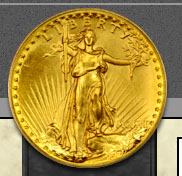
1889-CC Morgan Silver Dollar NGC MS63 DPL. Today’s
mobile phones have come along way since the days of
pay phones and most people would be hard pressed to
remember the last time they used a pay phone to make
a call. The pay phone was invented in 1889, when William
Gray, an inventor from Connecticut became frustrated
with having to beg to use a phone to call a doctor
when his wife became ill. He installed his first pay
phone in a Hartford bank. In Gray’s patented
design, coins of different denominations traveled
down separate chutes where they struck bells and gongs
that the operator could hear to verify the payment.
Pay phones of the day accepted quarters, dimes and
nickels and although they did not accept dollar coins,
putting a dollar worth of change in a pay phone would
allow you to call across multiple states.
The dollar coins that were available to the public
in 1889 were Morgan dollars. The Comstock Lode, one
of the greatest silver strikes in history, was discovered
in Nevada in the late 1850s. The strike put downward
pressure on silver prices worldwide. In 1878 Congress
passed the Bland-Allison Act which required the Treasury
Department to purchase large amounts of silver, and
to strike it as coins. For reasons of economy, the
Treasury chose to strike the silver as dollars.
Morgan dollars were minted from 1878 to 1904 and
again for one more year in 1921. Born in Birmingham,
England in 1845, George T. Morgan was chosen to design
the new dollar coin. Mint Director, Henry P.
Linderman, ordered that a head of Liberty be featured
on the obverse of the coin and Morgan recruited Philadelphia
school teacher Anna Willess Williams to pose for the
new design. The obverse of the coin features a left-facing
portrait of Miss Liberty. The reverse depicts a somewhat
scrawny eagle which led some to vilify the coin as
a "buzzard dollar." The designer's initial
M appears on both sides a first. It's on the truncation
of Liberty 's neck and on the ribbon's left loop on
the reverse.
The featured example is a marvelous one, graded MS-63
DPL by NGC, this coin was originally in a PCGS holder
and graded MS-63 DMPL. With flawless mirrored surfaces
and splendid frosted devices, this coin looks like
it should have been graded MS-64. With a mintage of
only 350,000 pieces, this 1889-CC is a true rarity.
An extraordinary coin with uninhibited beauty, perfect
for any collector!
This one is sold.
If you would like us to find one like it for you or,
if
you have one you would like to sell please contact
us.
Don't
see it here? Tell us what you want Click
Here