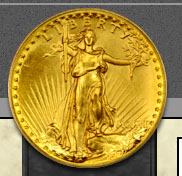
1856-S Double Eagle (1856-S $20) PCGS MS61. Bright mint luster blooms from the devices of this mint state 1856-S Double Eagle. A few wispy abrasions on Liberty’s cheek and a small mark slightly left of the coronet keep this coin from a higher mint state grade. This coin is not a “seawater uncirculated” as are others of this date and mint. The coin is sharply struck on both sides. Many 1856-S coins were recovered from the shipwrecked Yankee Blade, said to have been a Confederate transport. These recovered coins show sea water etching on the coin.
The California Gold Rush of 1849 caused large amounts of gold to come to the Mint for coinage. To meet this demand a new denomination, the double eagle, was created. The Mint Director, Robert Patterson tried to terminate the employment of James Longacre as Engraver because Patterson was afraid Longacre would interfere with the Chief Coiner, Franklin Peale’s lucrative private business of medal making using the Mint facilities. Ultimately, Longacre was able to retain his position and create the new double eagle.
Longacre’s design was substantially different from the previous capped Liberty eagle. It was similar to Gobrecht’s Large Cent Braided Hair Coronets of 1839 to 1857 in that instead of the cap, Liberty now wore coronet with her hair tied in the back. The reverse design depicted a modified heraldic eagle with a circle of stars above its head which are in turn surrounded by rays. The motto “E Pluribus Unum” is on each side of the eagle on matching ribbons that symbolize the new denomination. This design for the double eagle remained in use for almost sixty years. |